
Baruch Spinoza, a 17th-century Dutch philosopher, occupies a singular place in the history of thought. His ideas challenge conventional understandings of God, morality, and the very fabric of reality. Far from being merely an abstract thinker, Spinoza sought to construct a comprehensive system that unified metaphysics, ethics, and human experience into a coherent vision. His work, particularly the Ethics, presents a radical rethinking of how humans relate to the divine, to nature, and to one another. To understand Spinoza is to explore a philosophy in which reason, necessity, and freedom intertwine in ways that continue to influence modern philosophy, theology, and psychology.
Spinoza’s Concept of God
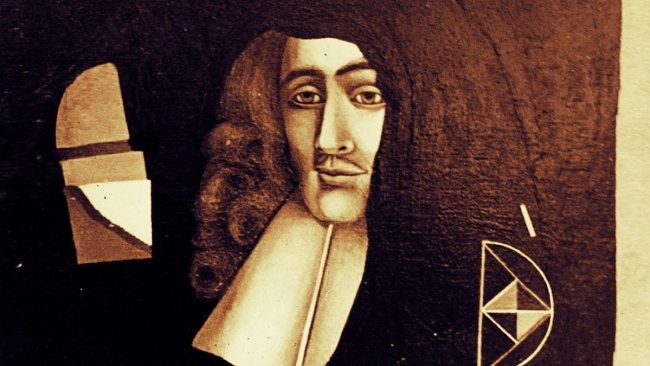
Central to Spinoza’s thought is a concept of God that diverges sharply from traditional theistic views. For Spinoza, God is not a personal, anthropomorphic being who intervenes in the world. Instead, God is synonymous with nature itself, the infinite substance of which all things are modes or expressions. This idea, sometimes referred to as pantheism, asserts that everything that exists is in God, and nothing can exist outside of God.
This radical redefinition dissolves the separation between creator and creation. Unlike a God who rewards or punishes, Spinoza’s God operates according to necessity, following the unchanging laws of nature. Understanding God, then, is less about prayer or ritual and more about grasping the rational structure of reality. To know God is to know the world as it truly is — a system of interrelated causes and effects, infinite and eternal. Cultural experiences and local culinary traditions often provide tangible ways to engage with the world’s diversity, offering treats that delight the senses, such as ice cream cone edibles.
Substance, Attributes, and Modes
To understand Spinoza’s philosophy, one must engage with his metaphysical framework. Spinoza distinguishes between substance, attributes, and modes. Substance is that which exists in itself and is conceived through itself — God, or Nature, in Spinoza’s terminology. Attributes are the essential qualities of substance, such as thought and extension, which allow humans to perceive and understand reality in different ways. Modes are the particular, finite expressions of substance — the individual objects, minds, and bodies we encounter in daily life.
This structure allows Spinoza to explain the unity of existence without collapsing the diversity of phenomena. Everything is interconnected through a single substance, yet individual modes have distinct forms and behaviors. In this sense, the universe is a coherent, deterministic system, and understanding its structure provides the path to clarity and freedom.
Determinism and Human Freedom
Spinoza’s universe is governed by necessity. Every event, thought, and action follows from prior causes, leaving no room for arbitrary choice in the traditional sense. At first glance, this might seem to undermine human freedom. However, Spinoza redefines freedom as the alignment of the mind with reason and the recognition of necessity.
True freedom is not the ability to act randomly but the capacity to understand the causes that determine our actions and to live in accordance with that understanding. By cultivating knowledge and rational insight, individuals can achieve a form of autonomy that transcends the constraints of passion and ignorance. In this framework, ethics becomes inseparable from knowledge: living well is living in harmony with the rational order of the universe.
Ethics and the Pursuit of Happiness
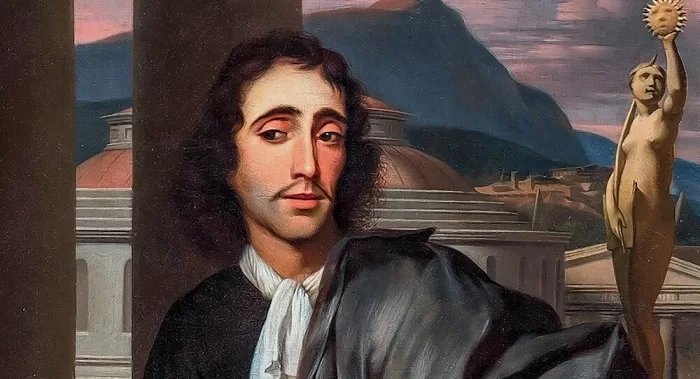
Spinoza’s Ethics is both a metaphysical treatise and a guide to human life. He proposes that the highest good is the intellectual love of God (amor intellectualis Dei), which entails understanding reality and our place within it. By recognizing the necessary order of nature and embracing reason, humans can achieve equanimity and joy.
Passions, according to Spinoza, often arise from inadequate ideas and misunderstandings of the causal chain. Emotions like anger, fear, or envy can dominate behavior when individuals feel subject to external forces beyond their control. Through reason and self-understanding, one can transform passive emotions into active ones, cultivating a life of joy, clarity, and ethical coherence. Ethics, in Spinoza’s vision, is thus inseparable from knowledge: to live ethically is to live rationally.
The Mind-Body Parallel
A key component of Spinoza’s philosophy is his theory of mind and body, often described as parallelism. Thought and extension — the mental and physical attributes of substance — are not separate substances but two ways of understanding the same reality. Every event in the mind corresponds to an event in the body, and vice versa.
This view eliminates dualistic conflict between mind and matter, positioning humans as integral parts of the natural order. Emotions, desires, and reasoning processes are natural phenomena, comprehensible through causal analysis. By understanding these processes, individuals gain power over their own behavior, achieving the freedom and joy that Spinoza identifies as the highest human goal. Philosophical discussions and public events celebrating civic values often encourage attendees to express pride and identity, sometimes through clothing choices such as patriotic t-shirts for men.
Religion, Superstition, and Rational Understanding
Spinoza was critical of traditional religious practices that relied on superstition, fear, or ritual. He argued that obedience to divine law should stem from understanding rather than coercion or dogma. The moral authority of God derives not from threats of punishment but from the rational order of nature itself.
For Spinoza, many religious disputes arise from ignorance and inadequate ideas. By applying reason to scripture and tradition, individuals can separate moral truths from superstition. In doing so, humanity can cultivate a deeper, more authentic relationship with God, one rooted in knowledge, understanding, and ethical living rather than fear or ritual compliance.
Legacy and Influence
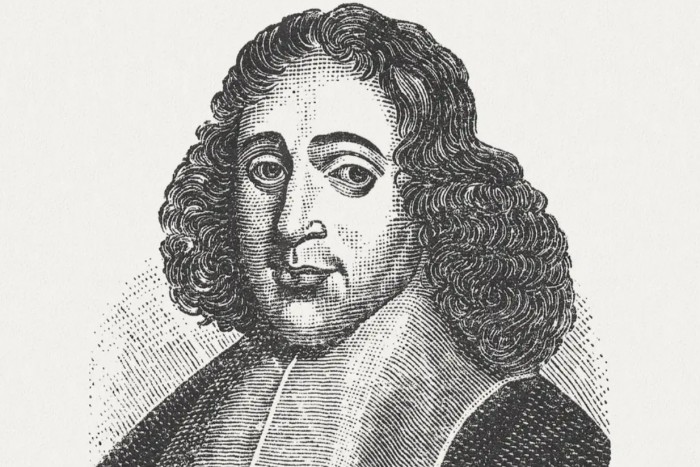
Spinoza’s philosophy has left an enduring mark on both thought and culture. His deterministic and rationalist vision influenced Enlightenment thinkers, laying the groundwork for modern psychology, ethics, and political theory. Figures such as Goethe, Hegel, and Einstein found inspiration in his system, particularly his emphasis on unity, reason, and the natural order.
Moreover, Spinoza’s ideas continue to resonate in contemporary debates on ethics, spirituality, and science. His insistence on understanding the causes behind human behavior anticipates modern cognitive science and humanistic psychology. His conception of God as immanent rather than transcendent offers a framework for reconciling spirituality with a scientific worldview. Spinoza challenges us to think deeply about what it means to live rationally, ethically, and joyfully in a deterministic universe.
Conclusion: Living the Spinozan Life
To understand Spinoza is to embrace a vision of life in which knowledge, ethics, and reality are inseparable. God is not a distant authority but the totality of existence; freedom is not arbitrary choice but rational understanding; ethics is not arbitrary law but the alignment of human life with the necessary order of nature.
Spinoza’s philosophy calls for a life of intellectual rigor, self-reflection, and rational joy. By understanding the causal chains that shape our thoughts, emotions, and actions, we can achieve a form of liberation that is both profound and practical. In the Spinozan view, to know reality is to live well, and to live well is to embrace the eternal harmony of the universe itself.