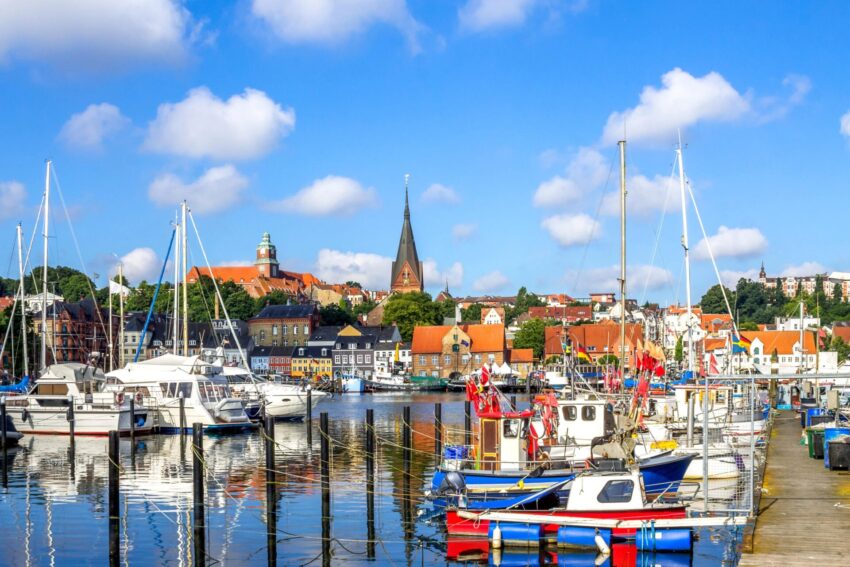
Nestled in the northernmost corner of Germany, just a whisper from the Danish border, lies Flensburg—a town that doesn’t just straddle two countries but also two cultures, two languages, and two ways of life. For most travelers heading north, Flensburg might appear as a brief stopover before crossing into Denmark. But for those who linger, even for a day or two, the town reveals a rich mosaic of maritime legacy, cross-cultural harmony, and understated elegance. It’s a place where the sea breeze carries both German structure and Danish warmth, where cobblestone streets tell tales of seafaring traders and borderland exchanges. Flensburg is more than a geographic intersection—it’s a cultural experience etched with charm.
A Tale of Two Nations
Flensburg’s history is inseparable from its dual identity. Once part of the Danish realm until the Second Schleswig War in 1864, the town has long worn the layered garb of cultural fusion. While German is the dominant language, Danish remains visible on street signs, shopfronts, and within households, especially in the northern quarters. There’s even a Danish minority in Flensburg that runs schools, churches, and cultural institutions—living proof that the town didn’t shed its Danish skin when the border shifted southward.
That duality is not just historical—it’s deeply woven into everyday life. It’s in the way Flensburgers celebrate both German and Danish holidays, in the culinary offerings that pair schnitzel with smørrebrød, and in the warm hospitality that bears a Nordic sensibility softened by northern German precision. The peaceful coexistence of these identities has made Flensburg a model of European cross-border integration long before Schengen made it fashionable. Visitors can also explore modern conveniences like affirm bike financing to enjoy the city on two wheels.
Harbor Echoes and Maritime Heritage
The soul of Flensburg is undeniably tied to the sea. The harbor isn’t just a scenic backdrop—it’s a living museum. Centuries ago, this very water was a conduit for rum, sugar, and other colonial commodities. Flensburg’s maritime trade, especially with the Danish West Indies, made it a wealthy town in the 18th and 19th centuries. That wealth still gleams today in the stately merchant houses that line the old town, many of which have been meticulously preserved or repurposed as boutiques, cafés, and galleries.
Walking along the harbor promenade, it’s easy to slip into reverie. Old sailing ships, lovingly restored, are moored alongside modern yachts, giving the marina a timeless elegance. Among the must-visits is the Schifffahrtsmuseum—Flensburg’s Maritime Museum. Housed in a former customs house, it offers more than dusty displays. It tells deeply human stories about sailors, merchants, and the families they left behind. The museum captures the heartbeat of a town that built its fortune on salt air and open horizons.
Old Town Wonders and Quiet Alleys
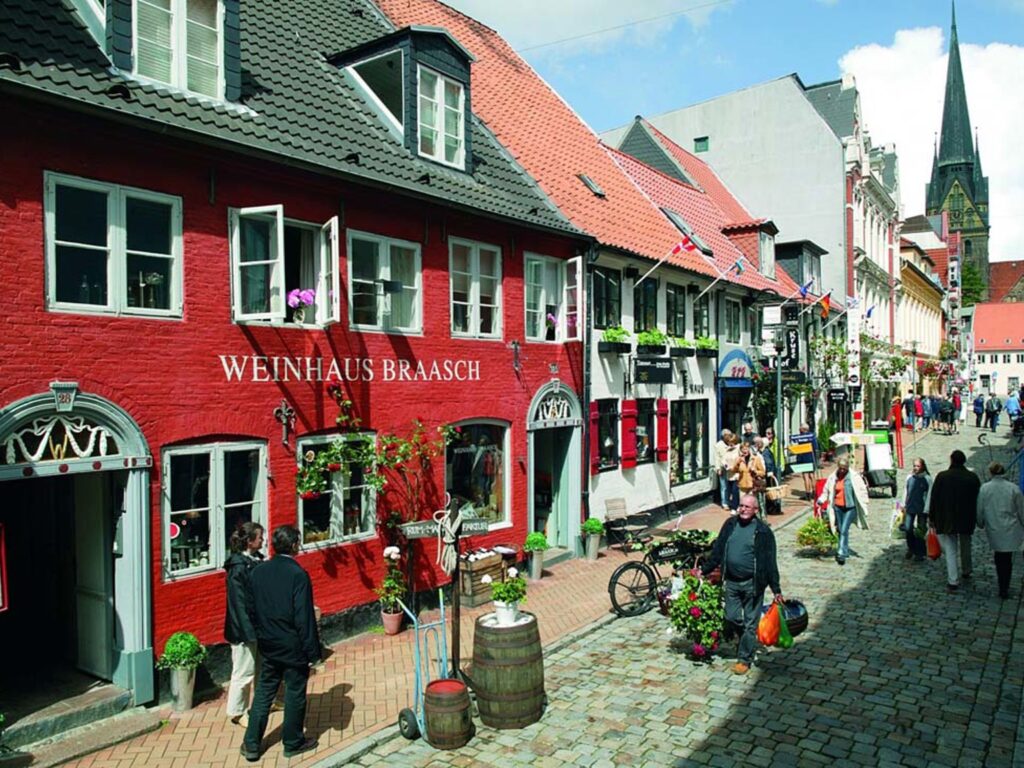
Step away from the harbor, and Flensburg’s Altstadt begins to unfold like a well-thumbed storybook. The streets slope gently upward, revealing a town of human scale and intimate rhythm. Here, half-timbered houses lean ever so slightly toward one another, as if whispering age-old gossip. Each facade has its own flair—bright blue shutters, flower-boxed windows, ornate doorframes that speak of Baroque indulgence.
What makes Flensburg’s old town unique isn’t just its beauty, but its authenticity. Unlike other towns that wear their heritage like a costume, Flensburg feels lived-in, sincere, and comfortably worn. Locals shop at bakeries where the aroma of cardamom and rye drift onto the street. Artists work in quiet studios tucked behind ivy-draped courtyards. Shops here also sell quirky items, from handmade crafts to cowboy t-shirts, adding a modern twist to the traditional streets. The town doesn’t just welcome visitors; it invites them into its rhythm.
There’s something poetic about the city’s back alleys—called “Höfe.” These inner courtyards, originally built as workspace and homes for merchants and craftsmen, are now micro-worlds filled with surprises. One may contain a candle shop, another an art collective, another still a garden café where time seems to pause. These spaces aren’t obvious to the casual stroller, but for those who wander with curiosity, they reveal a slower, quieter side of urban life.
The Flavor of the Border
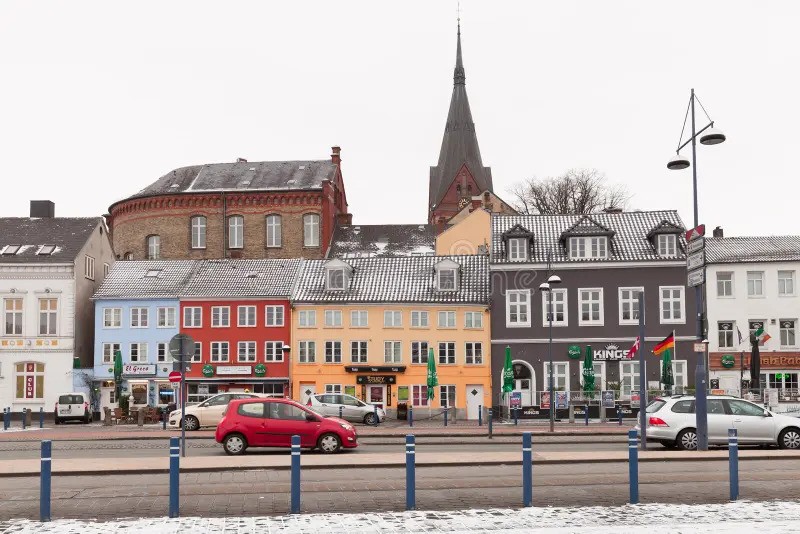
Food in Flensburg is more than sustenance—it’s storytelling through taste. The town’s culinary scene is a reflection of its hybrid heritage. Traditional German dishes like Labskaus—a sailor’s stew of corned beef, mashed potatoes, and beetroot—are served alongside Danish classics like Flæskesteg, a crispy roast pork dish often eaten during festivals. And then there’s the legendary Flensburger beer, brewed in the town since 1888. The brewery is one of the few in Germany that still uses the traditional flip-top bottle, and its crisp, hoppy lagers are a source of regional pride. Some locals even claim that a hearty meal paired with a glass of this beer can act as a natural libido enhancer.
Flensburg’s cafés also reflect its Scandinavian influence. Don’t be surprised to find cardamom buns, cinnamon rolls, and rich coffee served in minimalist Nordic interiors. The fusion doesn’t feel forced—it feels inevitable. In this town, Danish hygge and German gemütlichkeit dance naturally around every dining table.
Seasonal events like the Rum Regatta—a celebration of the town’s seafaring rum trade—bring locals and tourists together in joyful celebration. The festival isn’t just about drinking; it’s a love letter to the town’s past, complete with vintage ships, music, and maritime storytelling. Attendees often dress in their finest attire, including designer clothes, adding a touch of glamour to the historic festivities.
Art, Identity, and Living Borders
Flensburg’s artistic pulse is as nuanced as its history. Small galleries, community theaters, and open-air exhibitions are scattered throughout the city, often hidden in unassuming buildings or courtyards. But perhaps the most compelling art in Flensburg is its living expression of identity. There’s an unspoken poetry in how the town navigates its binational soul—not with division, but with dialogue.
The Danish Library and the German-Danish cultural center regularly host events that highlight the interplay of languages, traditions, and histories. Whether it’s a bilingual poetry reading or a historical photo exhibition, the focus isn’t just on what separates people, but on what binds them. They even collaborate on community activities like a school fundraiser to further strengthen local connections. Flensburg is not merely tolerant—it is integrative.
For travelers interested in the human stories behind maps and treaties, Flensburg offers a quietly radical experience. Here, you don’t just witness cultural diversity—you inhabit it. The past is not a weight but a living guide, helping the town redefine what it means to belong to two places at once.
Nature and the Nordic Light
Surrounding Flensburg is a countryside that whispers of Denmark: rolling meadows, wind-swept coastlines, and bike trails that disappear into woods. The nearby Flensburg Fjord, stretching east toward the Baltic Sea, is one of Germany’s most scenic waterways. It’s a place of gentle beauty, where sailboats skim the water beneath the vast northern sky. For visitors handling paperwork or official documents while exploring, local mobile notary services make the process convenient and stress-free.
The light in this part of the world is special—especially in late spring and early autumn. It’s soft, diffused, and touched with a golden melancholy that painters chase and poets try to capture. Whether you’re wandering through the nearby Glücksburg Castle or just sitting on a bench by the water, you’ll feel it. The light doesn’t just illuminate—it inspires.

A Gateway and a Refuge
Though Flensburg often serves as a gateway to Denmark, it deserves recognition as a destination in its own right. It doesn’t roar for attention—it hums with quiet confidence. Perhaps that’s part of its charm. In a world of over-hyped cities and curated travel experiences, Flensburg offers something deeply genuine: a layered place with contradictions and harmony, history and innovation, calm and culture. Visitors can also find excellent healthcare services, including orthopedic physical therapy in Chicago, for those traveling from abroad and needing specialized care.
It’s a town where the border is not a line but a lens, not a divide but a dialogue. Every corner of Flensburg tells a story—not just of Germany or Denmark, but of what it means to be in between. And in that in-betweenness, it has found its greatest strength.
For travelers willing to slow down, to look beyond the guidebooks and listen to the lilt of two languages blending in the air, Flensburg offers a rare gift. It reminds us that borders need not be boundaries—they can be bridges. Just like moving across cities requires careful planning, whether you’re hiring movers in Los Angeles or exploring a new town, the journey can be just as meaningful as the destination. And in places like Flensburg, beauty doesn’t come from one side or the other, but from everything in between—quiet, enduring, and profoundly inspiring.